Saturday, August 30, 2014

My Take on Welsh Rarebit: Add Fried Pickles!

I'm always on the lookout for quick, easy, delicious recipes, and the Season 2 finale of Mind of a Chef (now on Netflix), was a treasure trove. In particular, April Bloomfield's take on Welsh Rarebit, commanded several viewings.


The dish consists of mornay on toast. Despite its ubiquity in Britain, it has always been obscure in the United States. Though delicious, I think its longer preparation time (about 10 minutes), and inconvenient open-faced presentation have prevented it from reaching the popularity of our own grilled cheese.

Having never tasted Welsh Rarebit, I decided to give it a shot. Rather than follow the video above exactly, I rethought the dish/cleaned out my fridge. Here is what I came up with:


Welsh Rarebit Americano

For Sauce
- 3 T all-purpose flour
- 3 T unsalted butter
- 6 oz. Samuel Adams Cream Stout
- 3 oz. shredded cheddar cheese
- 2 T Worchestershire Sauce
- 1 T brown mustard
- Salt, pepper, and cayenne to taste

For Pickels
-3 slices of kosher dill pickles
-1/2 cup cornstarch
-1/8 cup all-purpose flour
- 1 tsp salt
- 5 grinds of fresh black pepper
- 1 tsp cayenne
- Canola oil

- You will also need two slices of white bread.

1) In a shallow dish, combine the cornstarch, flour, salt, pepper, and cayenne. Pat the pickles slices dry with a paper towel, then dredge in the cornstarch mixture. Be sure to cover the entire surface. Place the slices on a plate, until there are no dry spots left on the mixture. Then repeat.

While the second dredging is sitting, heat canola oil in a shallow, non-stick pan to a medium-high heat. The amount of oil will vary by pan, but it should coat the entire bottom and be no more than 1/4 inch deep. Once the oil is at temperature, place the pickle slices in the pan. Be sure not to crowd the pan. This means that the spatter from each slice should not contact any of the others. Fry on each side until a light golden-brown. This takes about three minutes per side.

Once the coating is golden-brown all over, remove from the oil, and dry on paper towels. Set the pickles aside at room temperature.

2)  Preheat an oven to 400 degrees.

In a 10" cast iron skillet, melt the butter over medium heat. Once melted, reduce to low, and mix in the flour, stirring until it is fully incorporated. Be careful not to burn it. Next, pour in the beer, and stir until the flour/butter mixture is fully incorporated. Next add, the cheese, stirring constantly until it is fully melted into the sauce. Add the Worchestershire Sauce, mustard, salt, pepper, and cayenne. Stir them in, then turn off the heat.

3) Toast two slices of white bread until dry on the outside, but not yet brown. Once toasted, spoon the sauce over the toast, and spread it until it covers the entire bread. Place the toast in the oven until the cheese sauce bubbles. Finish by placing the fried pickles on one slice, and placing the other on top to make a sandwich. Cut in half and serve.
 
My result was pretty good. Here is the cross-sectional view


Saturday, August 9, 2014

A Tidy Photo-Scrapbook From the Rock and Roll Hall of Fame

I recently completed my relocation from the great state of Connecticut to the kind of lame but economically viable state of North Dakota. It was a two day road trip that rates as one of the most unpleasant experiences of my life. Having already completed this trip (and its constituent legs) before, there was nothing novel or interesting about 48 hours of driving through boring places, sleeping at rest stops, living on fast food and granola bars, and crackly FM radio.

Anticipating this, I scheduled a detour to Cleveland to visit the Rock and Roll Hall of Fame. I had never been to Cleveland, but Lebron James thought it was worth a second chance. I decided to give it a first.

To better learn the city in limited time, I took the side streets from the highway (i.e. I got lost a lot). In this way I learned that Cleveland does not rock. Lebron went back because he is the Coolest of Kids, and wherever he sits is the Cool Kid's Table. Northeast Ohio may be his home, but now it is his personal fiefdom as well. I enjoyed the Rock and Roll Hall of Fame, but only go if you have some other reason to be in Cleveland.

With that in mind here my some of my favorite moments from the Hall of Fame:

My trip really began with a stop in Youngstown, Ohio for ice cream at Handel's. It's a mini-chain scattered from Illinois to Pennsylvania. Whenever I pass through, I stop at the original store just off Exit 229 on I-80. The ice cream is fresh and flavorful, with a custard-like texture. The caramel chocolate malt is the best ice cream I have ever had. This time I also tried strawberry, which was tremendous. Here it is being modeled by Michelle. She's the real rock star of this piece.


Here is the Handel's storefront. It hasn't changed since the first time I visited 12 years ago. What has changed is the neighborhood. When I first visited in 2002, Handel's was an oasis on a shuttered and crumbling road. Today it looks like an unremarkable commercial strip. Good for Youngstown.


One of the first exhibits in the Hall of Fame commemorates the great bluesmen. On display are guitars owned by greats such as John Lee Hooker, Freddie King, Robert Lockwood, Jr., and Elmore James. My personal favorite is Muddy Water's '58 Telecaster pictured here. Like other vintage Tele's this one has taken a pounding, yet looks good for many more.


The Hall of Fame also has extensive displays of performance apparel. This includes suits worn in performance by Hank Williams, and Bill Monroe, numerous James Brown jumpsuits, elaborate dresses worn by singers from Etta James to Beyonce, and even John Lennon's Sgt. Pepper's uniform.

This is a hand-tooled leather belt owned by Buddy Holly. It looks awesome yet it wasn't meant to be seen under his jacket. In keeping with his muted, nerdy look, Buddy wore his coolest accessory discreetly.


Though critical in the history of rock, Jimi Hendrix doesn't make for the best museum exhibit. His portion of the Hall is mostly occupied by stage outfits he wore. They are interesting as a whole, but there is no one piece of special importance.

Similarly, his guitars are not of great interest. Though a tremendous player, he plowed through dozens of Stratocasters and other guitars throughout his career. Thus, no one instrument takes on critical importance. This custom painted '67 Gibson Flying V is Jimi's most distinctive guitar, and his most copied. Though rarely played, it captures his fiery individualism better than any other tangible artifact. 
This is Duane Allman's '58 Les Paul in a faded tobacco sunburst. Nicknamed Hot 'Lanta, it was used extensively in the last several months of his life, and features on the album Eat a Peach. Duane acquired it through singer-songwriter Christopher Cross, which almost makes up for every time I've heard Sailing.

Though partial to Fender's during his session career, by the beginning of the Allman Brothers Band Duane had switched to vintage Gibson's, and put together a remarkable collection of late 50's and early 60's Les Pauls and SG's. Today they would be worth seven-figures, even if they didn't belong to the guy who did this.

On the back of the guitar, 'Duane' has been inlaid in used frets. This was done by the Allman Brother's road crew after Duane's death. 


These are Dickey Bett's hand written lyrics to the song 'Blue Sky' from the Eat a Peach album. The Allman Brothers (or their estates) have been very generous in allowing the Hall of Fame to display their historic memorabilia. I could have done a whole post on them.


This is Bootsy Collins' Fender Jazz Bass, which, after heavy modification became his famed 'Space Bass.' This is arguably the single funkiest instrument in existence. It was originally purchased for use during his time with James Brown. You can hear it on cuts such as 'Sex Machine,' 'Superbad,' and 'Talking Loud and Sayin' Nothing.'

Throughout the 70's, this bass was the driving engine behind the P-Funk Mothership, powering albums such as The Clones of Dr. Funkenstein, Mothership Connection, and Uncle Jam Wants You


This is the original control room from Sun Studios. Featured here is some of the equipment used in some of the foundational recordings of Rock and Roll. Not squeezed into the frame is the studio's piano. Although visually indistinct, it proved powerful and responsive to the touch of Jerry Lee Lewis.


This may be the most expensive two-guitar collection on the planet. Both these instruments are 1959 Les Pauls, which go for about $250,000. The one on the left belonged to Gary Rossington of Lynyrd Skynyrd, and was his primary guitar in the band's heyday (It was used for the bottleneck part on 'Freebird'). The one on the right is one of Duane Allman's. This particular one can be heard on the At Fillmore East live album.


Wednesday, July 30, 2014

An Introduction to New York Style Barbecue

Given the diversity of the New York food scene, one of its great mysteries is why certain regional or ethnic cuisines struggle to take root.

At any time of day, there are at least two programs about Barbecue competitions somewhere on basic cable. It is now a national tradition, yet New York struggles to come up with a credible joint.

There are many places in the five boroughs that offer southern comfort food. There aren't any good ones. The one exception is Blue Smoke, however, it's too upscale to count as traditional. It's a good restaurant, with a nice selection of bourbon. However, this discussion only pertains to places where you wouldn't take clients.

There are two factors which restrict the growth of barbecue in New York:

1) The ignorance of the local market. The historic lack of barbecue makes it hard for locals to distinguish good from bad. With nothing else to go on, New Yorkers gravitate towards cartoon pigs and hubcaps on the walls.

2) Space and zoning. Proper barbecue restaurants are difficult to introduce in dense urban areas. Whatever slow-smoking device used needs a proper flue, which can be tricky. Also, such restaurants require steady source of hardwood, and space to keep it.

In response, New York has developed its own take on barbecue. This style was created by three local chains, Dallas BBQ, Dinosaur BBQ, and Brother Jimmy's.

When it comes to smoked meat, all three are below average. Pork shoulder, ribs, brisket, and chicken are all served dry, slightly greasy, and under seasoned. Portions are small, expensive, and served with equally lifeless sides.

In traditional southern terms, they are terrible. But to write them off on these grounds is to miss the point. New York style barbecue isn't about barbecue.

The crown jewels of New York barbecue are alcoholic beverages, served as a slush or punch in a lucite goblet with a little umbrella in it. House specials are often named after natural disasters. In New York barbecue, the food is just there to soak up the booze.


In terms of design, these restaurants are meant to satisfy Upper West Side preconceptions of what West Virginia must be like. In a phrase, it's 'Cracker Barrel chic.' This means rusty farm implements and concert bills for old country music stars. In this regard, New York barbecue restaurants were trendsetting. They picked up on the dilapidated barn aesthetic well before anyone in Brooklyn got the idea.

New York style barbecue may not match up with the best America has to offer. But after a fourth Hurricane Sandy Shandy, who cares?


Tuesday, July 22, 2014

We Do Live in a Golden Age (with Colorful Filling)...


Is Rock and Roll still relevant and viable?

Usually this question is only asked as a jump off to ramble on the decay of American pop culture. It's become the 'back in my day...' speech for younger Baby Boomers and older Gen X'ers.

Talking points include:

-Nostalgic references to bands that were never actually relevant or viable (e.g. The Velvet Underground. That's right Lou Reed, here's the eulogy you always wanted, you overrated poser. I know you'll rest in peace. The grave is a great place to have no real ideas).

-Insinuations that Ariana Grande is responsible for growing belligerence in the Pacific Rim. Yes, we'd all have one less problem without Kim Jong Un, but let's not connect dots that aren't there.

-Vague explanations as to how The Twitter has undermined the character of American youth, aka 'the kids today...' sub-speech.

But getting back to the original question, is Rock and Roll a 21st Century music form?

Yes! The problem is not the music, but the musicians. Since the early 2000's rock has been in a talent drought.

Don't worry, these things happen. Rock and Roll itself emerged partly due to stagnation. By the mid-1950's, two major wars had either killed or derailed the young talent which fed traditional pop. Rather than developing fresh new acts, the music establishment was running on the fumes of Bing Crosby, Cole Porter, and whichever big bands could still scrounge bus fare to Des Moines. The time ripe for hungry young men with a raw, homespun sound.

For whatever reason -and I still haven't heard a good one- we just don't have great rock bands right now. There are several good ones, but none that add up to more than the sum of their influences. For example, Mastodon is very good metal band, but what do they do that wasn't being done 25 years ago? Joe Bonamassa is one of the strongest guitarists of his generation, but as long as his best material is classic rock covers, he won't make the transcendent impact of players like Clapton, Hendrix, et al. Rock doesn't lack a future so much as a way forward.

This brings up the next question: If America's best creative minds aren't making good rock music, what are they up to?

That answer: They're making cookies.

Today was the first time I realized how many more types of Oreos we have today as opposed to ten or even five years ago. Once upon a time, Halloween Oreos were a big deal. Today at the grocery story, I saw seasonal Limeade Oreos.

Limeade isn't even listed on the Oreo website. But Lemon is. So is Berry, Chocolate, Chocolate with Vanilla Cookies, Peanut Butter, Marshmallow Crispy, and... COOKIE DOUGH!

At the end of the day, there's no crisis at all. Rock music lacks creative vision right now, but the difference has been made up in the Nabisco labs.        

Thursday, July 17, 2014

Remembering Tom Watson... The 2009 Open Championship; 5 Years Later

Five years ago, a 59 year-old Tom Watson nearly won a 6th Open Championship. Needing a par on the 72nd hole for the win, he bogeyed. One four-hole playoff later, Stewart Cink was the 2009 Champion Golfer of the Year.

I was crushed.

Tom Watson is one of the 15 greatest players of all time. He made his bones as Jack Nicklaus' greatest post-Kennedy Administration rival. He dominated the Open like no one since Harry Vardon.

Stewart Cink is a talented player and a worthy major champion. In 14 years between turning pro and winning the Open, he defined Very Good. He won 6 PGA Tour events and recorded a Top-5 finish in every major.

He also built a strong candidacy for World's Least Interesting Man.

Cink is the sort of boring, clean-cut southerner who has long filled out the PGA Tour's middle and lower classes. His is the consistent, conservative, uninspired game that golf instructors love.

I wasn't upset that Tom Watson lost. I just would have preferred he lose to another great player, an out-of-nowhere journeyman, Angel Cabrera, or any other opponent who makes for an interesting narrative. The disappointment came watching the tournament be won by someone so uncompelling.


The same year as Watson's Last Stand saw the publication of Mark Frost's The Match. It recounts a 1956 four-ball match in which up-and-coming amateurs Harvie Ward and Ken Venturi took on the aging professional team of Byron Nelson and Ben Hogan as part of a bet arranged at of Bing Crosby's infamous Clambakes. Though only a friendly game, Frost portrays it as a bellwether event in golf history.

The match was close throughout, but the cagey old pros won in the end. As Frost points out, never again would the gap between the best amateurs and professionals be so close. Golf at its highest level was no longer a game of leisure.

At the time, I thought the 2009 Open was a similar end of an era. With Tiger Woods declining fast, the future of professional golf was murky. Phil Mickelson, Ernie Els, and Vijay Singh -golf's last great shotmakers- were aging fast. In a decade on Tour, Sergio Garcia had gone from golf's most exciting talent to a player defined by failure. Despite the buzz around some kid named McIlroy, I assumed he would follow suit.

Turnberry seemed to be a Culloden moment (Smugly dropping references to Olde Scotland is as time honored a tradition as the Open itself).  The bland, consistent, Scottsdale Standard game had won out over the expressive brilliance of Tom Watson. It seemed nothing interesting could fill Tiger's monolithic void.

Five years later, I'm pleased to say I was wrong. Els and Mickelson have captured the past two Open Championships. McIlroy followed a meltdown at the 2011 Masters by shooting the lowest aggregate score in U.S. Open history two months later. Bubba Watson has developed into the player John Daly once could have been. Even Martin Kaymer has reimagined the TPC style of play with his own Teutonic twist.

Hindsight reveals that the 2009 Open was no historic inflection point. Rather, it was the crowning achievement of a deserving professional, and one more story to tell the Watson grandchildren. Following golf is no longer as easy as watching Tiger kick everyone's ass, but that's not a bad thing.

Thursday, July 10, 2014

Picking Up the Crumbs of Crumbs


The Wall Street Journal today reported there may be investors interested in resurrecting Crumbs, a chain of cupcake bakeries which ceased retail operations earlier this week.

This makes sense. At this point Crumbs is a good value on paper. One could reason the company's biggest problem was over-expansion. Founded as a single location in 2003, within a decade it had grown to a chain of 79 stores. By 2011, is was listed on the NASDAQ. The cash intensive nature of expansion, coupled with the decline of the cupcake industry are what initiated the financial death spiral.

However, Crumbs had a more fundamental problem. Their cupcakes were lousy.

By volume, a Crumbs cupcake was about half frosting. This made for an unwieldy cupcake that defeated the point of the medium. On top of that, the frosting had no flavor. Though visually exotic, Crumbs cupcakes all featured this same insipid, sickly sweet frosting piled on a dry, flavorless cupcake. Factor in the $3-4 price for a single cupcake, and it's no wonder the novelty faded.

Crumbs may still become a useful investment. For the right price, it makes sense to buy the company and strip it to the bone. However, Crumbs is worthless as a bakery.

Friday, June 20, 2014

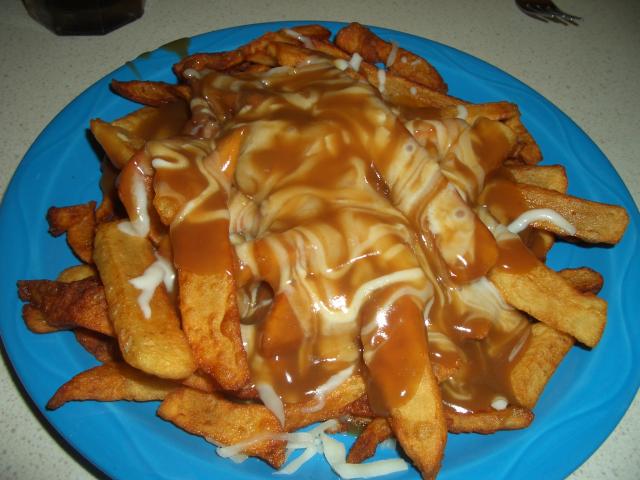
Poutine vs. Disco Fries: Everyone's a Winner With This Late Night Recipe

 In the past several years poutine has caught on in the northern United States. This trend has raised the profile of our national analog, disco fries.

Though debate rages about the intricate aspects of each, they share the same three components: french fries, gravy, and cheese.

In Quebec, this means fries topped with a thin beef gravy and cheese curds. Though no one is certain of the word's origin, 'poutine' seems to derive from regional French colloquialisms which have different particular meanings, but generally translate as 'a disgusting mess on plate.' 

Every time I talk to a real French person about poutine, they respond with the same sneering horror. Hence, I favor this etymology over less visceral theories.


Disco fries tend to use a thicker (often instant) gravy and melted cheddar or mozzarella. The best I know, its name derives from its popularity in the 1970's after a long night of booze, Bee-Gees, and blow.


In the spirit of international harmony, I've created this quick and easy recipe which combines the best aspects of both. In lieu of a better name, I call the NAFTA fries.

-1 bag frozen french fries, traditional or waffle cut.
-1 jar of quality beef gravy (Get the good kind. Go on, treat yourself! Or use homemade if you have that)
-1 tsp dried tarragon
-1 tsp fresh ground black pepper
-2 cups shredded sharp cheddar

1) Preheat the oven to 425 degrees. Bake the fries until deep brown, but not burnt. Plate the fries.
2) Bring the gravy to a simmer. Add the tarragon and black pepper, and stir.
3) Cover the fries with the cheddar.
4) Pour the gravy over the fries and cheddar. If desired, finish with a pinch of fleur de sel and a grind of black pepper over the top. 

This recipe combines the superior melt of American cheddar, with the richer flavor of the Canadian gravy. It is best served with a season of House on Netflix at 2 AM.